
 If you’re curious about what’s happening in the Niagara real estate market, our monthly Market Pulse newsletter is designed to keep you informed. Each edition delivers the latest housing data, local insights, and community news to help you make confident real estate decisions.
Below is a snapshot from our February 2026 Market Pulse update, highlighting key trends shaping the Niagara housing market.
Understanding the MLS® Home Price Index
The latest MLS® Home Price Index (HPI) benchmark data provides a clearer picture of how home prices across Niagara have shifted over the past year. The HPI benchmark is widely considered one of the most reliable measures of housing price trends because it tracks the value of a “typical” home over time, smoothing out fluctuations caused by individual sales.
Year-Over-Year Benchmark Price Changes
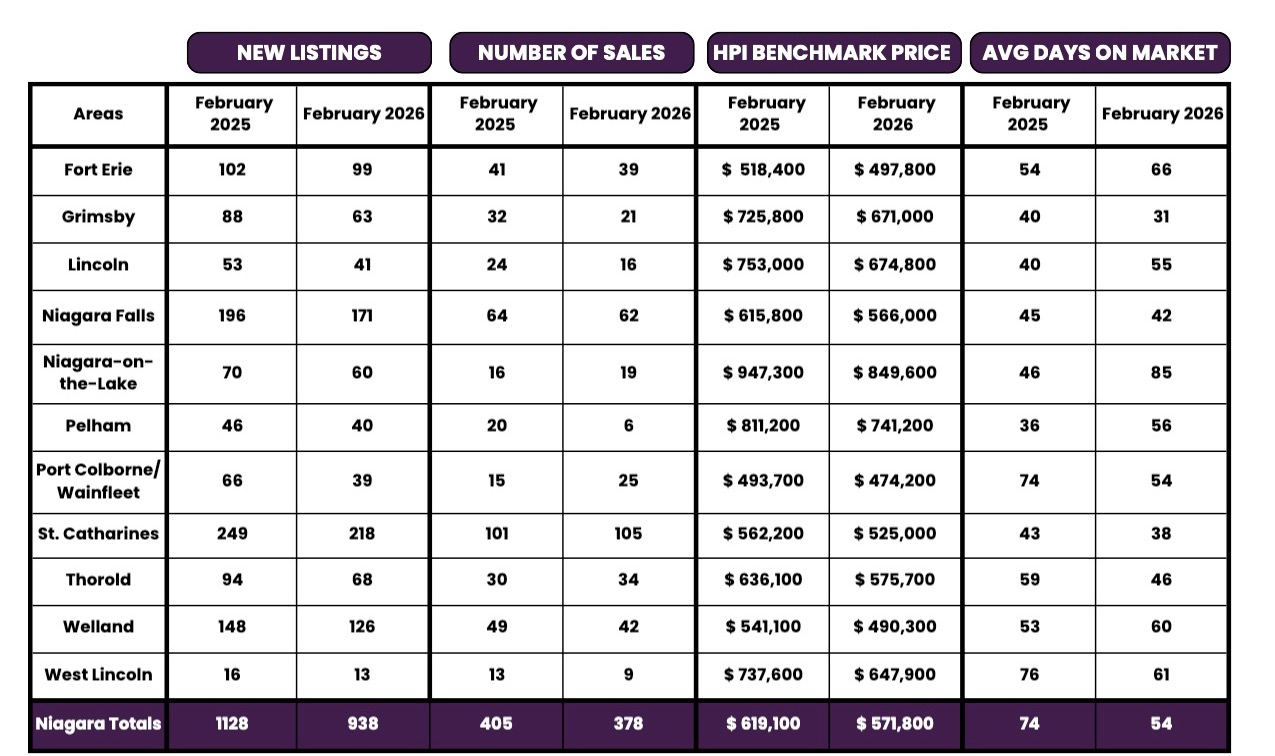
Across the Niagara Region, the benchmark price declined from $619,100 in February 2025 to $571,800 in February 2026, representing a 7.6% year-over-year decrease.
Looking at key local municipalities:
- Pelham: Benchmark prices moved from $811,200 in February 2025 to $741,200 in February 2026, a decrease of approximately 8.6%.
- Welland: Benchmark prices adjusted from $541,100 to $490,300, reflecting a 9.4% year-over-year decline.
These changes reflect broader market adjustments seen across many Ontario communities as higher interest rates and shifting buyer activity continue to influence pricing.
Inventory and Market Conditions
Inventory levels remain one of the biggest factors shaping the Niagara housing market.
As of February 2026, there were approximately 2,439 active listings across the Niagara Region. Notably, inventory has declined by more than 40% since early September, tightening supply in many communities.
Lower inventory levels can shift the dynamics of the market:
- For sellers: Reduced competition may strengthen positioning when listing a property.
- For buyers: Fewer available homes can increase competition and require more strategic decision-making.
Month-to-Month Market Movement
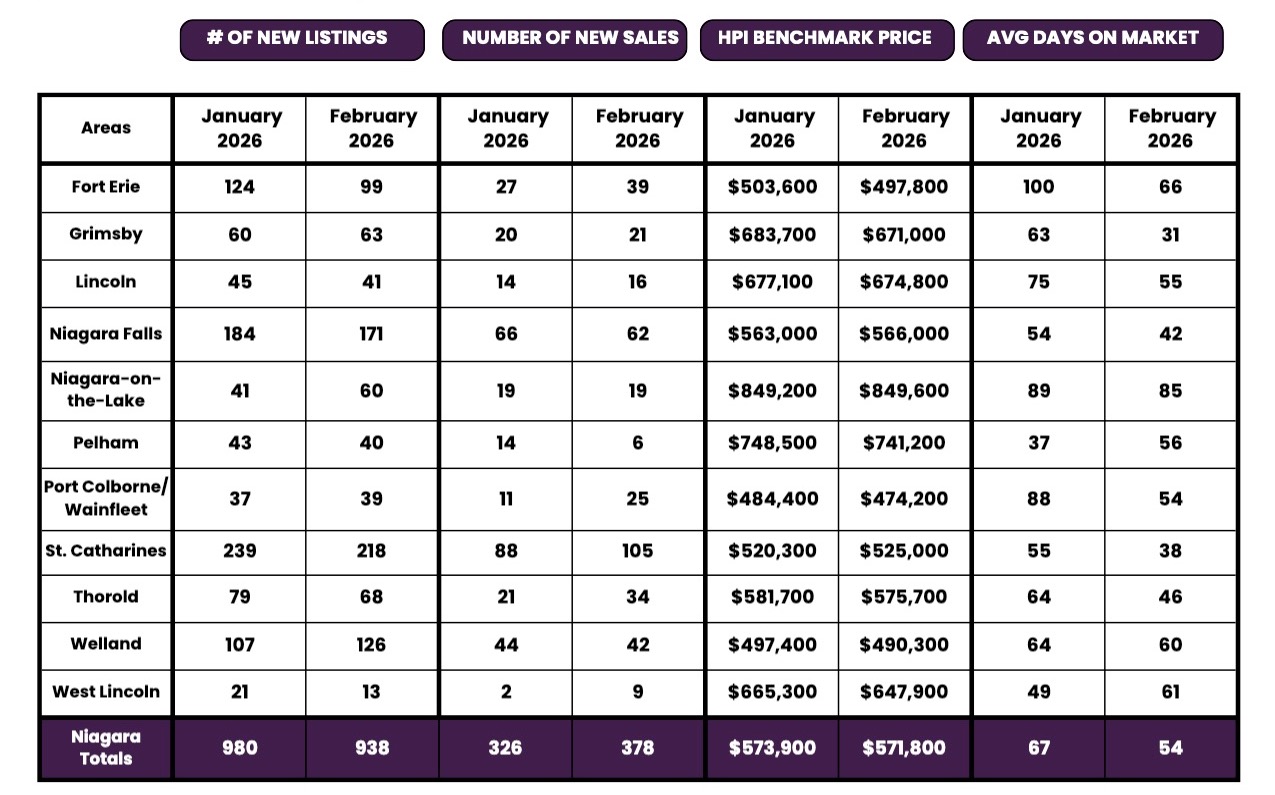
Comparing January to February 2026, benchmark prices have remained relatively steady:
- Niagara Region: $573,900 in January → $571,800 in February
- Pelham: $748,500 in January → $741,200 in February
- Welland: $497,400 in January → $490,300 in February
These modest month-to-month adjustments are typical during the winter real estate season. As the spring market approaches, increased listings and sales activity often provide clearer signals about the direction of home prices.
Stay Informed with Market Pulse
Our Market Pulse newsletter provides regular updates on Niagara’s housing market, along with local insights and community news.
If you’re buying, selling, or simply staying informed about the local market, it’s a great way to keep up with the trends shaping our region.
If you would like to receive future editions, simply fill out our contact form with a request to join our Market Pulse mailing list.
